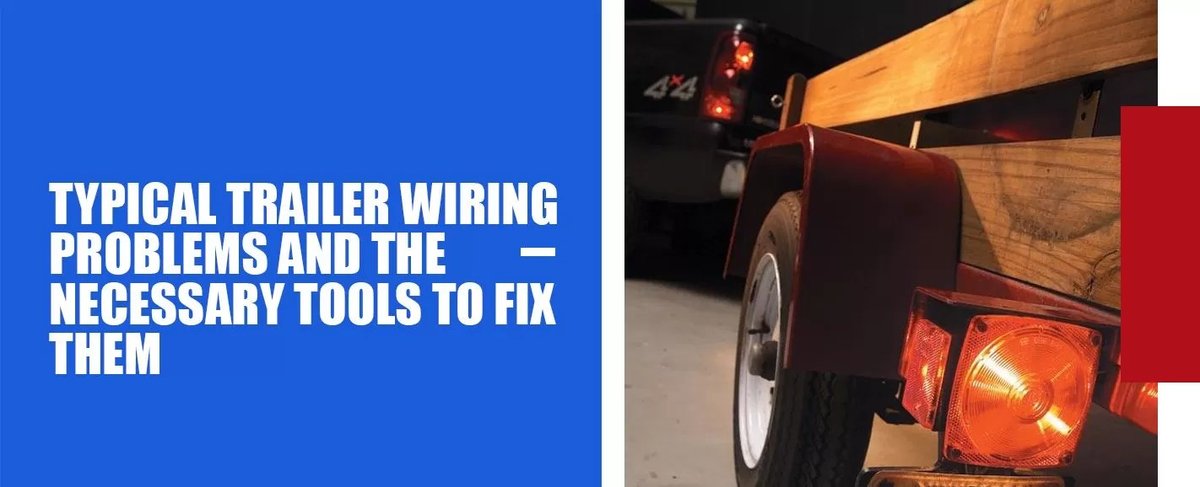
That feeling of hitting the road, trailer hitched, gear secured, and the open highway ahead? It’s freedom. But that freedom quickly turns to frustration—and a safety hazard—when your trailer lights decide to go on strike. Whether it's a nagging blinker issue or a complete blackout, troubleshooting common 6-pin trailer wiring issues is a skill every tower needs in their arsenal. Ignoring faulty lights isn't just illegal; it puts you and everyone else on the road at serious risk.
Proper trailer wiring ensures your brake lights, turn signals, and running lights communicate your intentions clearly, especially crucial with equipment that extends beyond your tow vehicle. And while it might seem intimidating, most trailer wiring problems stem from a few common culprits that are surprisingly straightforward to diagnose and fix.
At a Glance: Your Quick Troubleshooting Roadmap
Before you dive in, here's the skinny on getting your trailer lights back in working order:
- Start with the obvious: Burnt-out bulbs and blown fuses are often the culprits.
- Ground control: An overwhelming majority of trailer light issues trace back to a poor or insufficient ground connection. Cleanliness is key!
- Isolate the problem: Determine if the issue lies with your tow vehicle or the trailer itself before digging deeper.
- Visual inspection first: Look for loose wires, corrosion, or damaged connectors.
- Test with a purpose: Use a circuit tester to systematically check for power at each connection point.
- Preventative care pays off: Regular cleaning and inspection can save you a roadside headache.
Why Your Trailer Lights Matter (Beyond Just the Law)
Think of your trailer lights as the silent communicators of the road. They signal your braking, your turns, and your very presence, especially during dusk, dawn, or bad weather. Without them, you're a phantom in the rearview mirror, a dangerous guessing game for other drivers. Components wear out, vibrations loosen connections, and corrosion silently creeps in. That's why a quick check, ideally before every trip, isn't just good practice—it's non-negotiable for safe towing.
Your Essential Toolkit for Wiring Wizardry
You don't need a full mechanic's bay to tackle most wiring woes. Here’s what to gather before you start:
- 12V Circuit Tester or Multimeter: Your absolute MVP for checking power.
- Jumper Wire: Handy for creating temporary grounds or bypassing sections.
- Additional Wire: For repairs or extending connections.
- Wire Stripper/Cutter: For clean wire work.
- Electrical Tape: For temporary insulation.
- Wire Brush or 220-grit Sandpaper: For cleaning corroded contacts. A 3/8-inch dowel can help reach tight spots.
- Electrical Contact Cleaner: To dissolve grime and corrosion.
- Dielectric Grease: To protect connections from moisture after cleaning.
- Replacement Light Bulbs: Make sure you have the correct type and wattage.
- Replacement Fuses: For both the trailer and your tow vehicle.
- Wiring Harness Kit: Includes terminals, connectors, and heat-shrink tubing for more involved repairs.
- Screwdriver and Nut Driver: For accessing lights and connections.
- Power Drill (optional): For creating new ground points if necessary.
- Tow Vehicle Tester (optional but useful): A dedicated device that plugs into your vehicle's harness to simulate trailer loads and test all functions.
Decoding Common 6-Pin Wiring Glitches & Their Fixes
Before you grab a tool, understanding what specific symptom points to what potential cause can save you a lot of time. Here's a rundown of the common issues you might encounter with your trailer's 6-pin setup. If you're looking for a detailed breakdown of each wire's function, our 6 pin trailer wiring guide offers an excellent deep dive into the standard color codes and their purposes.
The Lights Are Out (or Just Barely There)
- No lights or dim lights: This is often the first sign of trouble.
- Potential Causes: Burned-out bulb, widespread corrosion on contacts, broken wires, or—the most common culprit—a poor or insufficient ground wire.
- None of the light functions work: A complete blackout suggests a more systemic problem.
- Potential Causes: The 12V power wire isn't linked to your car battery, a mismatch between a harness designed for a factory tow package and a vehicle without one, a blown or missing relay/fuse in the tow vehicle, a very poor ground connection affecting everything, or a harness overload.
- Lights worked initially but stopped: This points to something coming loose or failing under load.
- Potential Causes: A loose or weak ground connection, harness overload due to excessive current draw, or a short developing in the wiring.
Specific Light Functions Failing
- One light function doesn't work (e.g., brake, turn signal, reverse lights): If only one part of the system is affected, the problem is usually isolated.
- Potential Causes: The specific harness wire isn't connected or has a weak connection, a blown fuse dedicated to that circuit, the brake wire isn't connected, insufficient ground for that particular light, or for reverse lights, the 5th wire isn't attached to the reverse circuit.
- One turn signal activates both sides: This is a classic symptom of a specific grounding issue.
- Potential Causes: The brake wire on the harness isn't properly grounded, or there's an insufficient ground in general.
Unexpected Light Behavior
- Vehicle headlights cause trailer lights to stop functioning: This suggests an issue when multiple circuits are active.
- Potential Causes: Inadequate ground on either the truck or trailer side, or an overloaded harness due to too many lights drawing power.
- One or more trailer lights remain on (even with ignition off): A baffling issue that drains your battery.
- Potential Causes: An improper connection to the truck's wire (e.g., connected to constant power instead of ignition-switched), an insufficient ground causing a feedback loop, or (for LED lights) being powered by a small residual current from the 4-way plug.
- Harness functions until the trailer is connected: The harness works fine on its own, but the trailer brings problems.
- Potential Causes: An insufficient ground or a harness overload that only manifests when the full load of the trailer lights is introduced.
Persistent Electrical Woes
- Fuses repeatedly blow: A tell-tale sign of a severe electrical problem.
- Potential Causes: A strong indicator of a short circuit or an overload in the circuit.
Your Step-by-Step Guide to Diagnosing Trailer Wiring Issues
Ready to roll up your sleeves? Follow these steps to systematically pinpoint and resolve your trailer's electrical gremlins.
Step 1: Isolate the Problem (Vehicle vs. Trailer)
This is your crucial first move. Don't waste time fixing a trailer issue if the fault is in your tow vehicle, and vice-versa.
- Test Your Tow Vehicle's Signals:
- Plug a 4-way adapter (if you don't have a 6-pin tester) or a 12V circuit tester directly into your tow vehicle's 6-pin or primary connector.
- Have a helper activate the brake lights, left turn signal, right turn signal, and tail lights. As they do, observe your tester.
- What to look for: Does the tester light up for each function? If a signal is absent, dim, or inconsistent, the problem likely resides in your truck.
- Truck-side checks: This could mean a blown fuse, a faulty relay, or damaged wiring within your tow vehicle. Sometimes, simply removing and reinstalling the power fuse for several minutes can reset things.
- Wiring clarification: For older 2-wire vehicle systems, green and yellow wires often handle both turn and brake signals. For modern 3-wire systems, red wires typically carry dedicated brake lights, while yellow and green are for turn signals.
Step 2: Dive Deep into Ground Connections
Seriously, start here. Poor ground connections are the single most common cause of trailer wiring issues. It's not glamorous, but it's effective.
- On the Truck:
- Locate the ground region for your tow vehicle's trailer harness. It's usually a white wire attached to the vehicle's frame.
- Inspect for: Corrosion, rust, or paint buildup between the ground terminal and the metal frame. Paint is an insulator!
- Clean: Use your wire brush or sandpaper to clean the area down to bare, shiny metal. Replace corroded ground screws if necessary.
- Avoid Stacking: Never stack multiple ring terminals under a single factory ground screw. If you have extra grounds, find a new, clean metal point for them, or move the harness ground to a dedicated spot.
- On the Trailer:
- Find the ground wire (also typically white) on your trailer. It should be securely bolted or welded to the trailer frame.
- Inspect and Clean: Just like on the truck, ensure a clean, bare-metal connection.
- Tongue Folds: If your trailer has a folding tongue, connect the ground behind the tongue. This prevents the hinge from interrupting the ground path.
- Aluminum Frames: If your ground is currently connected to an aluminum part, move it to the main steel frame. Aluminum isn't as good a conductor for grounding purposes and can corrode differently.
- Test an Alternative Ground:
- If you suspect a ground issue, temporarily disconnect the existing ground wire from the trailer frame.
- Attach a jumper wire to this ground wire and run the other end directly to the negative terminal of your car's battery.
- If this resolves the issue, you've found your culprit! You'll then need to establish a permanent, clean ground connection on the trailer.
Step 3: Scrutinize Wiring and Connectors
Once the ground is solid, it's time to check the pathways electricity travels.
- Visual Inspection (The Quick Scan):
- Examine the trailer's connector plug (your 6-pin). Look for bent, broken, or pushed-back pins.
- Trace all visible wiring along the trailer frame. Check for cuts, pinches, exposed insulation, frayed wires, or debris. Pay close attention to areas where wires might rub against the frame or moving parts.
- Cleaning the Contacts:
- If you spot corrosion on the connector pins, use your wire brush or fine sandpaper with electrical contact cleaner to scrub them clean.
- Protection: Once clean, apply a dab of dielectric grease to each pin and socket. This prevents moisture ingress and future corrosion.
- Plug-in Harnesses:
- If your trailer uses plug-in harness sections, ensure they are clicked securely into place. Sometimes, simply re-seating them can resolve a loose connection.
- Compatibility: Double-check that the part number of your harness matches your vehicle's make, model, and year. Mismatches can cause strange electrical behavior.
- Wire Orientation: Confirm green wires are routed to the passenger side and yellow to the driver's side (this is standard for turn signals).
- Power Wire: Verify the 12V power wire is securely connected to your vehicle battery and that its inline fuse (if present) isn't blown.
- Tow Package: Ensure your vehicle actually has a factory tow package if you're using a harness designed for one. Vehicles without a factory package often require a different type of harness or a power converter.
- Hardwire Installations:
- For trailers with hardwired connections, confirm each wire connects to its correct functional location. Don't assume wire colors will always match; always test or refer to a wiring diagram.
- Continuity Test (Finding Breaks):
- Use your multimeter set to continuity or resistance mode.
- Connect one lead of your multimeter to a specific pin on your trailer's 6-pin connector.
- Connect the other lead to the corresponding light or function at the other end of that wire.
- What to look for: A healthy wire will show continuity (a beep or a very low resistance reading). No continuity means a break in the wire.
- Repairing Breaks: If you find a break, cut out the faulty section, solder a new connection, and insulate it thoroughly with heat-shrink tubing to prevent future corrosion or shorts.
Step 4: Check Bulbs and Fuses
These are often the easiest fixes, so don't overlook them!
- Bulbs:
- Simply unscrew or twist out each bulb and visually inspect the filament. If it's broken or discolored, replace the bulb.
- Correct Specs: Always replace bulbs with the correct type and wattage. Using the wrong bulb can cause dimness, overheating, or circuit overloads.
- Fuses:
- Trailer Fuses: Some trailers, especially those with auxiliary functions or more complex lighting, may have their own fuse panel. Check these.
- Tow Vehicle Fuses: Crucially, check the fuse for your tow vehicle's trailer circuit. This is usually located in the under-hood fuse box or a fuse panel inside the cabin. Consult your vehicle's owner's manual for the exact location.
- Blown Fuse = Warning: A blown fuse is rarely a random event; it typically signals a short circuit or an overload. If a fuse blows immediately after replacement, stop and thoroughly inspect the wiring for damage before replacing it again.
Step 5: Unmasking Shorts or Overloads
These problems can be frustratingly intermittent or cause repeated failures.
- Overload Explained: An overload occurs when a circuit draws more electricity (amperage) than it's designed to handle. This can cause wires to overheat, insulation to melt, or fuses to blow.
- Identify: Compare the maximum amperage rating of your harness to the total current draw of your trailer lights. If fuses repeatedly blow or lights are dim, disconnect the trailer and re-test your vehicle signals. If your vehicle operates correctly without the trailer, the fault lies within the trailer harness being overloaded by the trailer lights.
- Reduce Load: If you suspect too many lights are causing an overdraw (e.g., numerous clearance lights), remove some auxiliary bulbs or replace incandescent bulbs with LED versions. LEDs draw significantly less power and can prevent overloads.
- Resetting: For some integrated control units, removing the main trailer fuse for several minutes can reset an overloaded circuit.
- Short Circuit Explained: A short circuit happens when an uninsulated live wire accidentally touches a grounded surface or another wire, creating an unintended, low-resistance path for electricity. This causes a massive surge in current and almost always blows a fuse.
- Identify: If fuses blow immediately upon connection or activation of a specific function, you likely have a short. Look for pinched wires, exposed copper where insulation has rubbed off, or wires that have melted together.
- Diagnose: Disconnect sections of the trailer wiring system one by one (e.g., unplug one light at a time) and re-test the fuse. When the fuse stops blowing, you've isolated the problematic section.
Step 6: Tackling Stubborn Corrosion
Sometimes corrosion hides in plain sight, or in hard-to-reach places.
- Inside Sockets: For corrosion deep within wiring sockets or light housings, use 220-grit sandpaper. Wrapping a small piece around a 3/8-inch dowel or even a pencil can help you reach and clean the contacts effectively. Finish with electrical contact cleaner and dielectric grease.
- Mounting Bolts: Ensure that any mounting bolts that double as ground points have clean, paint-free contact with the trailer frame. If a light grounds through its mounting hardware, verify the non-aluminum mounting area is clean and free of paint.
- Aluminum Frames (Revisited): If your trailer light is mounted on an aluminum surface and grounds through its mounting stud, it's best practice to run a dedicated ground wire from the light stud directly to the steel trailer frame. This creates a much more reliable ground path.
Proactive Measures: Keep Your Lights Shining Bright
An ounce of prevention is worth a pound of roadside frustration.
- Clean and Grease: Regularly clean your trailer's 6-pin connector (and the vehicle's receptacle) with electrical contact cleaner, then apply dielectric grease. This simple step prevents moisture and corrosion, which are the leading causes of failure.
- Protect Your Splices: If you've made any wire splices, always use heat-shrink tubing over them. This creates a waterproof seal that's far superior to electrical tape alone.
- Secure Your Wires: Use zip-ties or wire looms to secure all wiring away from moving parts, sharp edges, and hot exhaust pipes. This prevents chafing, cuts, and melting.
- Frequent Inspections: If you tow in harsh conditions (saltwater, road salt, heavy rain, off-road), inspect your harness more frequently. These environments accelerate wear and corrosion.
- Fresh Ground Points: For older trailers with persistent ground issues, consider drilling a fresh ground point on a clean, bare section of the steel frame. Just be sure not to drill into anything vital!
- Quality Matters: Investing in high-quality wiring components and ensuring your harness properly matches your vehicle’s tow package will significantly enhance reliability and longevity.
When to Call in the Cavalry
While many issues are DIY-friendly, some problems are best left to the pros.
If you're facing detailed glitches that defy your best troubleshooting efforts, contemplating a full wiring replacement due to severe, widespread corrosion, or dealing with complex jobs like redoing an entire system, it's time to consult expert professionals. They have specialized diagnostic tools and experience with intricate wiring schematics that can save you time, money, and potential headaches. Avoid attempting to rewire the entire system from scratch until you've exhausted all other troubleshooting possibilities; it's often a much bigger job than it appears.
Getting your trailer lights working again isn't just about avoiding a ticket—it's about ensuring safety for you and everyone sharing the road. With a systematic approach and the right tools, you can confidently tackle most common 6-pin trailer wiring issues and get back to enjoying the journey.