Towing a trailer opens up a world of possibilities, from weekend camping trips to hauling essential equipment. But none of that is possible without a robust and reliable electrical connection between your tow vehicle and your trailer. A properly wired trailer ensures your lights communicate your intentions on the road and, critically, that your electric brakes engage safely when needed. This isn't just about convenience; it's about road safety for you and everyone around you.
While simpler 4-pin connectors handle basic lighting, the 6-pin trailer wiring schematic steps up the game, offering vital additional functions that many modern trailers require. This comprehensive super pillar hub is your ultimate guide, breaking down everything you need to know about 6-pin trailer wiring. We'll demystify the connections, simplify installation, and empower you to troubleshoot any issues, ensuring your towing experience is always seamless and secure.
The Power of Six: Why a 6-Pin Connector is Your Towing Ally
The 6-pin trailer connector is a workhorse, designed for trailers that demand more than just basic lighting. Unlike its 4-pin counterpart, which typically only manages tail lights, turn signals, and ground, a 6-pin system adds crucial capabilities. Most notably, it provides a dedicated circuit for electric trailer brakes, significantly enhancing safety and control, especially with heavier loads. It also often includes an auxiliary 12V+ power line, useful for charging trailer batteries or powering interior lights while parked.
This expanded functionality makes the 6-pin ideal for a wide range of applications, from utility trailers carrying significant weight to pop-up campers, small travel trailers, and boat trailers that feature electric braking systems. Understanding its distinct advantages and how each pin contributes to your trailer's operations is the first step towards confident towing. To truly dive deep into what makes this connector tick, you'll want to Understand 6-pin trailer connectors with our dedicated guide.
Unraveling the Wires: Your Go-To 6-Pin Trailer Wiring Schematic
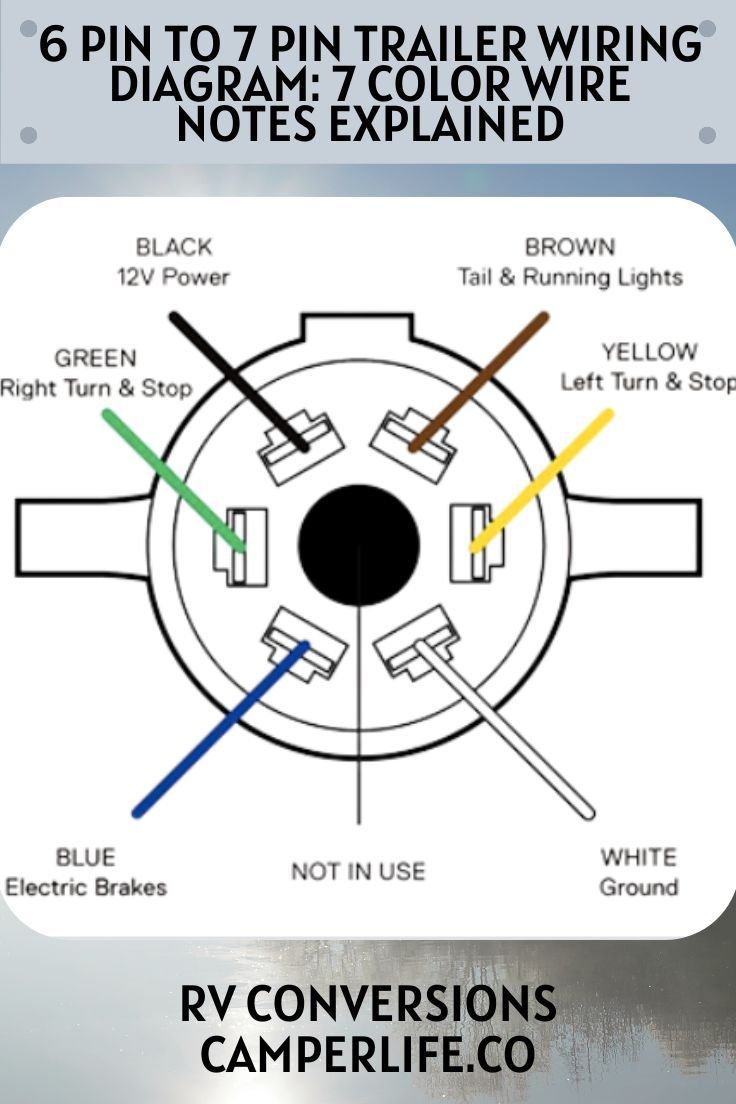
The heart of any successful trailer connection lies in a clear, standardized wiring schematic. For 6-pin connectors, there's a common pinout that nearly all manufacturers adhere to, making it easy to wire your vehicle and trailer correctly. Each pin serves a specific purpose, carrying power or signals for various trailer functions. Knowing this standard prevents misconnections and ensures all systems operate as intended.
Let's break down the typical pin assignments, common wire colors, and recommended wire sizes you'll encounter. Adhering to these specifications is vital for both functionality and electrical safety.
Pin-by-Pin Breakdown: What Each Wire Does
Here's the standard configuration for a 6-pin trailer connector:
- Pin #1: Common Ground
- Function: Provides the essential return path for all electrical circuits. A good ground is critical for everything to work.
- Common Wire Color: White
- Minimum Wire Size: 12 AWG
- Pin #2: Electric Trailer Brakes
- Function: Carries the modulated voltage from your tow vehicle's brake controller to activate the trailer's electric brakes.
- Common Wire Color: Blue
- Minimum Wire Size: 12 AWG
- Pin #3: Tail Lights, License Plate Light, Running Lights
- Function: Powers all the lights that illuminate when your vehicle's headlights or parking lights are on.
- Common Wire Color: Brown
- Minimum Wire Size: 16 AWG
- Pin #4: 12V+ Auxiliary Charging Circuit
- Function: Provides continuous 12-volt power to charge your trailer's battery or operate auxiliary devices within the trailer, even when the vehicle is off (depending on vehicle wiring).
- Common Wire Color: Black/Red
- Minimum Wire Size: 12 AWG
- Pin #5: Left Hand Turn Signal, Left Hand Brake Light
- Function: Controls the left-side turn signal and brake light on the trailer.
- Common Wire Color: Yellow
- Minimum Wire Size: 16 AWG
- Pin #6: Right Hand Turn Signal, Right Hand Brake Light
- Function: Controls the right-side turn signal and brake light on the trailer.
- Common Wire Color: Green
- Minimum Wire Size: 16 AWG
Understanding these assignments is key to any wiring project. For a visual guide and more granular detail on wire types and best practices, refer to our Standard 6-Pin Trailer Wiring Schematics pillar.
From Spool to Socket: Installing Your 6-Pin Trailer Wiring with Confidence
Embarking on a DIY wiring project can seem daunting, but with the right guidance, it's an achievable task that saves you time and money. Proper installation goes beyond just connecting wires; it involves careful planning, using the correct tools, and employing techniques that ensure durability and safety. This includes selecting appropriate gauge wires, using robust connectors, and weatherproofing all splices to prevent corrosion and shorts.
Whether you're installing a new connector from scratch or replacing a damaged one, attention to detail is paramount. Always disconnect the vehicle's battery before starting any electrical work, and double-check all connections before testing. If you're ready to get hands-on, our DIY 6-pin trailer wiring guide walks you through every step, ensuring a professional and reliable setup.
When the Lights Go Out: Troubleshooting Your 6-Pin Connections
Even with the best installation, electrical issues can sometimes arise. A malfunctioning trailer connection can manifest in various ways, such as non-working lights, intermittent brake function, or a trailer battery that won't charge. These problems can be frustrating, but many common issues can be diagnosed and fixed with a systematic approach.
Troubleshooting typically involves checking connections for corrosion or looseness, inspecting fuses in the tow vehicle, and using a multimeter or test light to verify power and ground at various points. Start with the simplest checks and work your way through the system. Don't let a wiring glitch ruin your trip; learn how to Troubleshoot 6-pin trailer wiring issues with our dedicated guide, which provides detailed steps for diagnosing both lighting and electric brake problems.
Bridging the Gaps: Adapting and Converting 6-Pin Wiring
The world of trailer connectors isn't limited to just one type. You might encounter scenarios where your tow vehicle has a 6-pin connector, but your trailer requires a 4-pin or a 7-pin, or vice-versa. Adapting between these different types is a common need for many towers. Adapters are readily available for common conversions, allowing you to use different trailers without rewiring your vehicle or trailer.
However, it's important to understand the implications of these conversions. For instance, converting a 6-pin to a 4-pin means you'll lose the electric brake and auxiliary power functions, as the 4-pin simply doesn't have the necessary circuits. Conversely, converting from a 4-pin to a 6-pin won't magically add brake control to your tow vehicle if it wasn't there originally. To avoid confusion and ensure seamless transitions between different trailer types, we've created a guide to help you Simplify trailer wiring conversions.
Understanding your 6-pin trailer wiring schematic empowers you to connect your trailer confidently, knowing every light will shine and every brake will respond. This knowledge not only enhances your safety on the road but also gives you the satisfaction of mastering an essential aspect of towing. Dive into our supporting pillars for even deeper insights and practical advice, and hit the road with peace of mind.